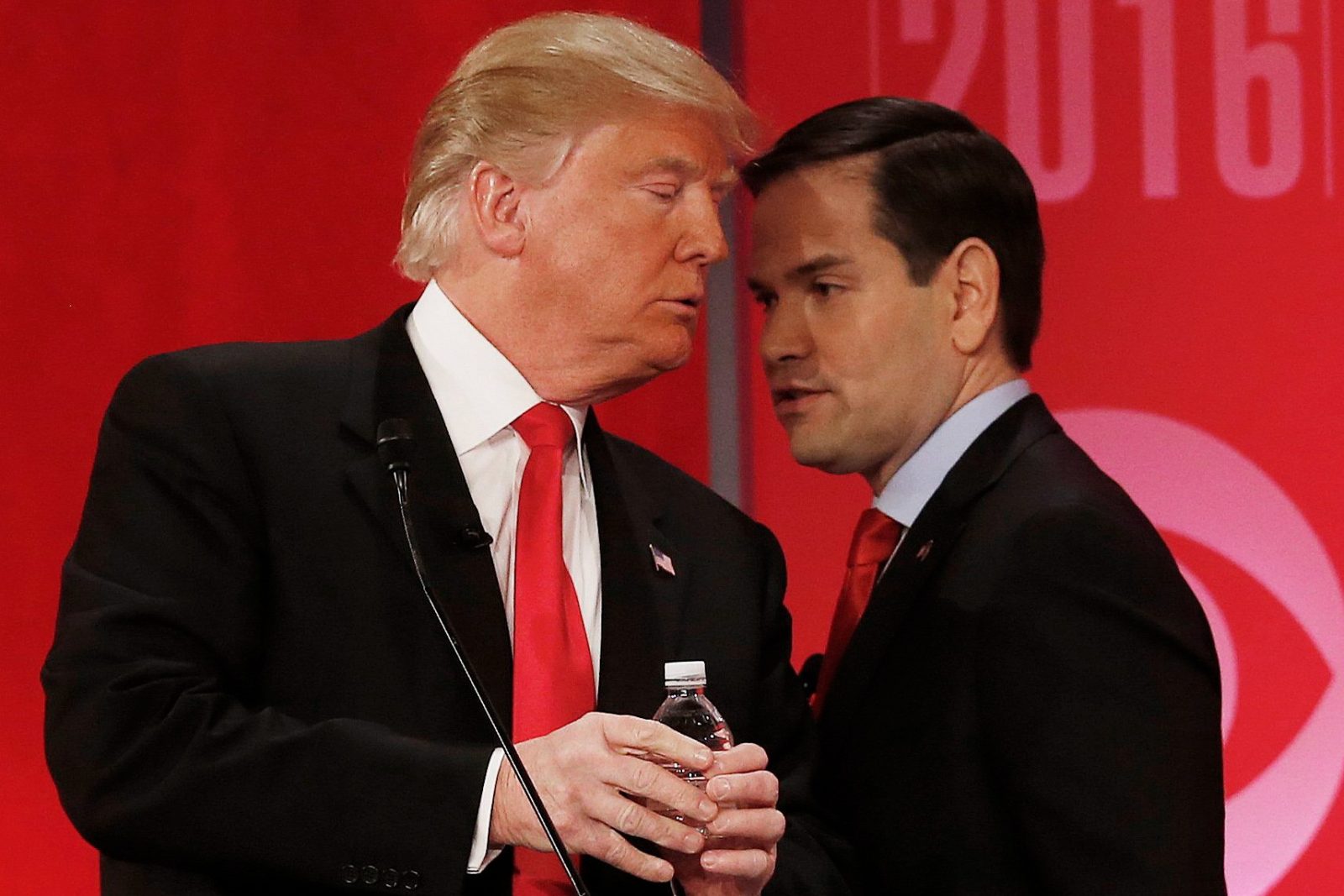
TRUMP SAYS MARCO RUBIO COULD GO DOWN AS THE GREATEST SECRETARY OF STATE IN U.S. HISTORY — THE RECORD IS IMPRESSIVE, BUT HISTORY HASN’T VOTED YET
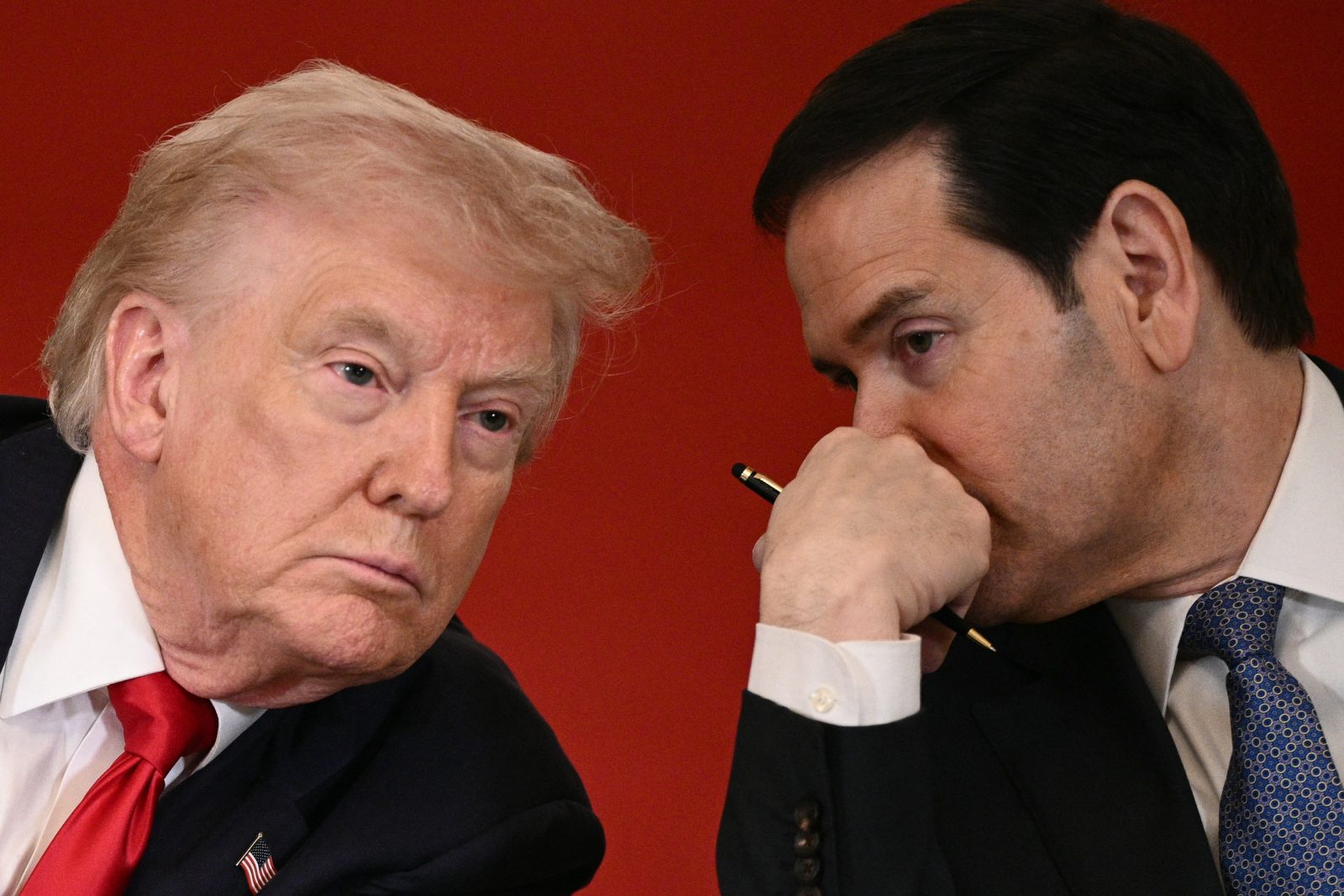
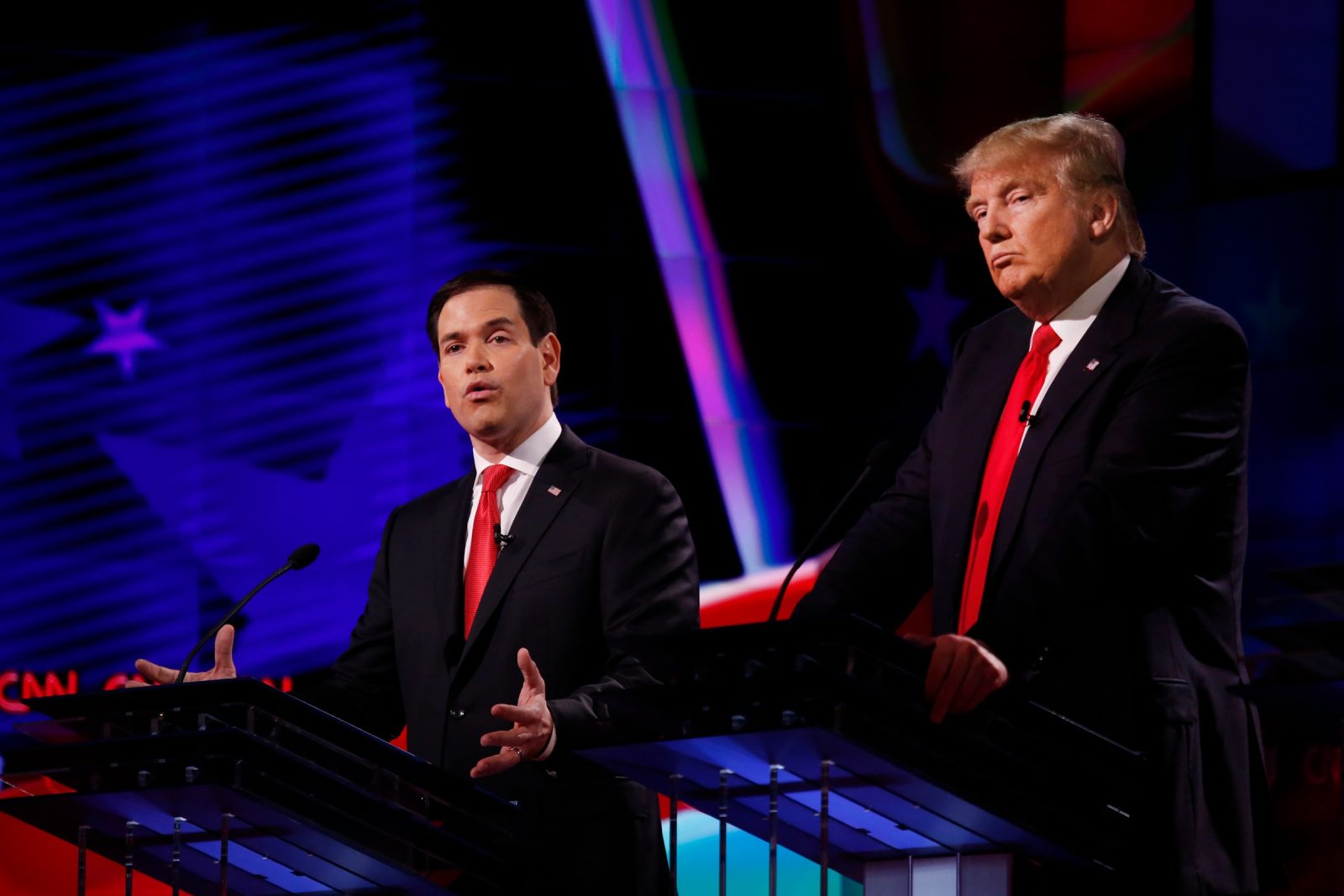
President Donald Trump has repeatedly offered extraordinary praise for Secretary of State Marco Rubio, predicting that his former 2016 Republican primary rival could ultimately be remembered as the greatest person ever to hold America’s top diplomatic post.
The praise is real. It is not a fabricated social-media quote.
At the Shield of the Americas Summit in Miami on March 7, Trump called Rubio a “fantastic Secretary of State” and said he was on track to become “the best Secretary of State in history.” Trump immediately added an important qualification: “That’s my opinion. Now, I’m a little prejudiced because I like him too.”
Two days later, Trump told reporters that Rubio was doing a great job and would “go down as the greatest Secretary of State in history.” On May 24, speaking by telephone during an event in India, Trump repeated the claim almost word for word.
What is not established is the stronger viral formulation that Rubio has somehow been objectively “ranked” or proven to be the best-performing secretary of state in American history. There is no authoritative historical ranking that has reached that conclusion, and Rubio is still in office while several of the administration’s biggest foreign-policy tests remain unresolved.
Trump really has called Rubio the best or greatest Secretary of State in U.S. history. That is presidential praise and political judgment — not an independent historical ranking.
Trump Has Repeated the Claim for Months
The idea that this is a brand-new declaration is misleading.
Trump has been building the Rubio superlative since early in his second administration.
In March 2025, he said Rubio had a chance to become America’s best secretary of state. By January 2026, Trump was telling audiences that Rubio was going to “go down as the best Secretary of State.”
At the March 7 Shield of the Americas Summit, Trump went further and explicitly compared Rubio with past officeholders, saying Rubio was already leading “by just about a smidge over a couple of pretty great ones” despite having completed only about a quarter of the presidential term.
On March 9, when asked why Americans should trust Rubio to negotiate with Cuba, Trump again said he thought Rubio would become the greatest secretary of state in history.
And at a May 24 Freedom 250 event in India, Trump told Ambassador Sergio Gor: “Marco — well, Marco is the greatest. I’ll tell you, he’s going down as the greatest Secretary of State in the history of the U.S.”
The verified Trump wording is “best” or “greatest Secretary of State.” I found no credible evidence of an independent body formally ranking Rubio as the “best-performing Secretary of State in history.”
Why Trump Is So Impressed With Rubio
Rubio’s political position inside the administration is unusual.
He entered office as a former senator with years of experience on foreign-policy and intelligence issues and was confirmed by the Senate without opposition from the members voting.
Trump then gave him an expanding portfolio that went well beyond the traditional State Department role.
Rubio has served simultaneously as secretary of state and national security adviser, making him the first official since Henry Kissinger in the 1970s to hold both of those enormously influential national-security positions at the same time.
He has also been repeatedly used as one of the administration’s most visible public defenders on Venezuela, Iran, Cuba, Latin America, immigration-related visa policy and the administration’s broader “America First” diplomatic strategy.
That concentration of responsibility is itself evidence of Trump’s trust in him.
Rubio Has Become Central to Trump’s Western Hemisphere Strategy
One of Rubio’s strongest claims to influence is the administration’s aggressive reorientation toward the Western Hemisphere.
The administration captured Venezuelan leader Nicolas Maduro in a U.S. military operation in January 2026 and has attempted to reshape Venezuela’s government, security posture and oil sector.
Rubio has been one of the administration’s principal voices defending that policy and arguing that hostile governments, drug-trafficking organizations and Iranian or Chinese influence will no longer be allowed to dominate America’s neighborhood.
The March Shield of the Americas Summit, which Rubio helped organize, brought together regional governments around new security and counter-cartel cooperation.
For Trump supporters, this is a major Rubio strength: the secretary has helped make Latin America and the Caribbean central to U.S. national-security strategy instead of treating the hemisphere as a secondary diplomatic theater.
The New Venezuela Oil Deal Is a Major Rubio Achievement — if It Works
Rubio’s profile rose again at the end of August when Trump announced what he called the biggest oil deal in world history with Venezuela.
According to the administration and the Venezuelan government, the arrangement involves 17 oil fields with an estimated potential of 65 billion barrels.
Trump said the deal was negotiated by Rubio, Defense Secretary Pete Hegseth and Venezuela’s acting president, Delcy Rodriguez.
The proposed structure would give the United States a large effective share of production through a new private venture and access to oil that could be used to rebuild the Strategic Petroleum Reserve and supply military needs.
Rubio called the agreement a huge win for Americans and Venezuelans.
If the agreement produces sustained investment, significantly expands production and reduces U.S. energy costs, it could become one of the administration’s most consequential economic-diplomatic achievements.
The Venezuela agreement has been announced, but its long-term success is not yet proven. Experts warn that rebuilding Venezuela’s deteriorated oil infrastructure could take years and require enormous investment.
Rubio’s Iran Record Is Much Harder to Grade
Any claim that Rubio has already surpassed every secretary of state in history has to confront the administration’s largest current foreign-policy crisis: the war with Iran.
Rubio has been deeply involved in the administration’s Iran strategy, from diplomacy and sanctions to explaining war aims and communicating with allies.
The United States and Israel have inflicted severe damage on Iran’s military capabilities and nuclear infrastructure.
U.S. intelligence assessments cited by Reuters indicate that Iran’s estimated nuclear breakout time has been lengthened, and large portions of Iran’s navy and air-defense network have been destroyed or disabled.
Those are real strategic gains.
But six months into the conflict, Iran has not surrendered, the Strait of Hormuz remains badly disrupted and there is still no durable settlement.
The administration has increasingly shifted toward economic pressure and sanctions after military action failed to produce a quick political resolution.
The Costs of the Iran War Are Also Real
The conflict has imposed serious costs that make historical verdicts premature.
Reuters reported in late August that 18 U.S. service members had been killed and more than 750 injured since the war began.
The conflict has consumed large quantities of precision munitions and strained air-defense inventories and carrier deployments.
Oil shipping through the Strait of Hormuz has remained disrupted, contributing to higher energy costs.
Reuters/Ipsos polling cited in the same analysis showed that only 31 percent of Americans approved of the conflict and that Trump’s overall approval had fallen as gasoline prices rose.
Iran remains capable of launching missiles and drones and threatening shipping and U.S. partners.
A secretary of state’s historical reputation cannot be separated from whether the wars and negotiations he helps manage produce lasting outcomes.
Iran has been militarily damaged, but the war is unresolved. Calling Rubio historically unmatched before the central conflict of his tenure has ended is necessarily speculative.
Rubio Is Trying to Turn Military Pressure Into Diplomacy
Rubio’s defenders argue that the current phase is exactly where a secretary of state earns a legacy.
He has told allies that Washington is shifting from repeated strikes toward sanctions and economic pressure while continuing negotiations over the Strait of Hormuz and Iran’s nuclear program.
The challenge is to convert battlefield leverage into an agreement that protects shipping, limits Iran’s nuclear capabilities and reduces the likelihood of another large regional war.
If Rubio eventually helps secure a durable settlement on those terms, Trump’s historical praise would have a much stronger factual foundation.
If the conflict instead becomes a long, expensive stalemate, historians are likely to judge the same record very differently.
The State Department Overhaul Is One of Rubio’s Most Consequential Decisions
Rubio has also attempted to transform the institution he leads.
He argued that the State Department had become bloated, ideologically distracted and insufficiently focused on core American interests.
The administration reorganized bureaus, eliminated or consolidated offices, reduced personnel and shifted resources toward priorities such as China, immigration, strategic competition and the Western Hemisphere.
Supporters say the changes made diplomacy more accountable to the elected president and reduced bureaucratic resistance to the administration’s agenda.
Rubio has framed the overhaul as an effort to make every bureau serve a clear mission and to ensure that U.S. diplomacy speaks with one voice.
That institutional discipline is one reason conservatives frequently describe him as one of Trump’s most effective Cabinet members.
Critics Say Rubio Has Weakened the Diplomatic Machinery
The same restructuring is one of the strongest arguments against declaring his tenure an unquestioned historical success.
Reuters reported in May that about 3,000 State Department employees had left during the previous year, roughly half through firings and half through buyouts.
At that point, 109 of 195 U.S. ambassadorial posts were vacant, according to the American Foreign Service Association.
Former diplomats and allied officials told Reuters that governments increasingly relied on informal channels and people with direct access to Trump because traditional embassy and State Department lines had become less predictable.
The administration rejects that criticism and says a smaller, politically aligned structure makes U.S. foreign policy faster and more effective.
The disagreement goes to the heart of Rubio’s legacy: whether he streamlined an unaccountable bureaucracy or hollowed out expertise that future administrations will need.
The State Department restructuring is a policy choice with measurable benefits and costs. Describing it as either a proven triumph or the destruction of American diplomacy goes beyond what can yet be known.
The USAID Takeover Produced Similar Arguments
Rubio also oversaw the dismantling of the U.S. Agency for International Development and the transfer of surviving foreign-aid responsibilities into the State Department.
He said more than 80 percent of USAID programs were canceled because they did not serve — and in some cases harmed — core U.S. interests.
Supporters viewed that as a historic cleanup of foreign assistance that had drifted into ideological or wasteful programs.
Critics argued that abrupt cancellations damaged humanitarian programs, U.S. soft power and America’s ability to compete with China in developing countries.
A State Department inspector general report released in July 2026 found staffing shortages, information-technology problems and delayed guidance as the department absorbed programs carrying tens of billions of dollars in obligated funds.
That does not settle whether the policy was right or wrong, but it demonstrates why claims of flawless execution are difficult to sustain.
Rubio’s Political Skill Is a Genuine Asset
Even critics of the administration often acknowledge that Rubio is a more conventional and disciplined communicator than many of Trump’s political allies.
He can translate Trump’s instinctive and sometimes unpredictable foreign-policy positions into structured arguments about deterrence, sovereignty, borders, alliances and national interest.
He also possesses long familiarity with Latin America, Cuba and Venezuela, speaks Spanish and has relationships developed through years in the Senate.
Trump has repeatedly used Rubio in high-profile public settings because the secretary can defend controversial policies in a way that is direct without being as improvisational as the president.
That combination of ideological loyalty and institutional fluency helps explain why Rubio has accumulated so much authority.
Rubio’s Public Standing Is Better Than Some Trump Colleagues — but Not Historically Dominant
There is some polling evidence that Rubio is comparatively well regarded inside the current administration.
A Marquette Law School national survey conducted July 22 through July 29 found Rubio had the best net favorability among the Republican administration figures tested.
But “best” in that table still meant a negative national rating: 34 percent favorable and 45 percent unfavorable, with 21 percent saying they had not heard enough to form an opinion.
That is not evidence of a public consensus that Rubio is America’s greatest secretary of state.
It shows that he was viewed less negatively than several other prominent Trump administration officials in that particular poll.
There Is No Standard Historical Ranking of Secretaries of State
Presidential rankings receive enormous academic attention, but there is no universally accepted recurring scholarly poll that definitively ranks every secretary of state from best to worst.
Any historical comparison therefore depends on criteria.
Should a secretary be judged by wars avoided, treaties signed, alliances built, territory acquired, human rights advanced, economic gains delivered, presidential influence or institutional stewardship?
Different standards produce different answers.
That problem becomes even greater when the person being ranked is still serving and many of his signature policies have not yet produced final outcomes.
Rubio Is Competing With Enormous Historical Legacies
The office has been held by figures whose impact can only be measured across decades.
John Quincy Adams, who served from 1817 to 1825, is described by the State Department’s own Office of the Historian as one of the most influential diplomats in American history. His tenure included major boundary settlements and diplomacy that helped define the country’s continental position.
George C. Marshall served as secretary of state during the creation of the European Recovery Program that became known as the Marshall Plan, one of the foundational strategies of postwar American power.
Dean Acheson helped construct the early Cold War alliance system and NATO-era architecture.
James Baker played a central diplomatic role during German reunification, the collapse of the Soviet bloc and the coalition-building that preceded the Gulf War.
Henry Kissinger remains one of the most consequential and controversial secretaries in history because of the opening to China, detente and his role in Vietnam, Chile and other Cold War crises.
A judgment that Rubio has already surpassed all of them requires more than presidential enthusiasm.
Rubio may eventually earn a place among America’s most consequential secretaries of state. Comparing an unfinished tenure with legacies measured over decades cannot produce an objective final ranking today.
Trump Himself Admitted the Claim Was Personal
The most useful fact-check comes from Trump himself.
At the March 7 summit, after saying Rubio would become the best secretary of state in history, Trump openly acknowledged that the declaration was his own opinion and that he was “a little prejudiced” because he liked Rubio.
That line is important because it captures the correct way to interpret the claim.
Trump is not citing an academic survey.
He is praising an official he trusts, signaling confidence in his foreign-policy leadership and elevating a Cabinet member whose political future may extend well beyond the current administration.
The 2028 Question Is Impossible to Separate From the Praise
Rubio’s rise has also produced speculation about the 2028 Republican presidential race.
Trump has publicly praised both Rubio and Vice President JD Vance and has occasionally floated the idea of the two appearing together on a future ticket.
Reports have described donors and Republican strategists taking Rubio increasingly seriously as a potential national candidate.
Rubio has publicly played down that speculation and has said Vance would be a formidable successor.
Nevertheless, repeated presidential declarations that Rubio is the greatest secretary of state in history inevitably boost Rubio’s political stature.
That does not make the praise insincere, but it is another reason to treat it as a political judgment rather than a neutral performance score.
What Can Actually Be Said With Confidence
Donald Trump has repeatedly said Marco Rubio is on track to become the best or greatest Secretary of State in United States history.
The claim is verified in official presidential transcripts, including Trump’s March 7 remarks at the Shield of the Americas Summit and his May 24 telephone remarks to an event in India.
Trump has also explicitly described the claim as his opinion and acknowledged that he is personally biased in Rubio’s favor.
There is no authoritative independent ranking establishing Rubio as the best-performing secretary of state in American history.
Rubio has accumulated extraordinary influence within the administration, serving as both secretary of state and national security adviser and becoming one of Trump’s most trusted foreign-policy officials.
He has played major roles in the administration’s Western Hemisphere strategy, Venezuela policy, Iran strategy, State Department restructuring and foreign-aid overhaul.
The newly announced Venezuela oil agreement could become a major diplomatic and economic achievement if it produces the investment and energy output the administration predicts.
The Iran war remains the largest unresolved test of Rubio’s tenure. Iran is badly weakened, but the conflict has lasted six months, disrupted the Strait of Hormuz, caused American casualties and strained U.S. military resources without yet producing a durable settlement.
Rubio’s State Department reforms have made the institution smaller and more directly aligned with Trump’s agenda, which supporters celebrate and many former diplomats argue has weakened America’s traditional diplomatic capacity.
Polling does not show a national consensus around Rubio. A July Marquette poll gave him the best net rating among several Trump administration figures tested, but his own rating remained net negative.
Historical figures such as John Quincy Adams, George Marshall, Dean Acheson, James Baker and Henry Kissinger left legacies that can be assessed only because the consequences of their diplomacy have unfolded across decades.
So the strongest defensible answer to Trump’s claim is not a simple yes or no.
Leave a Reply