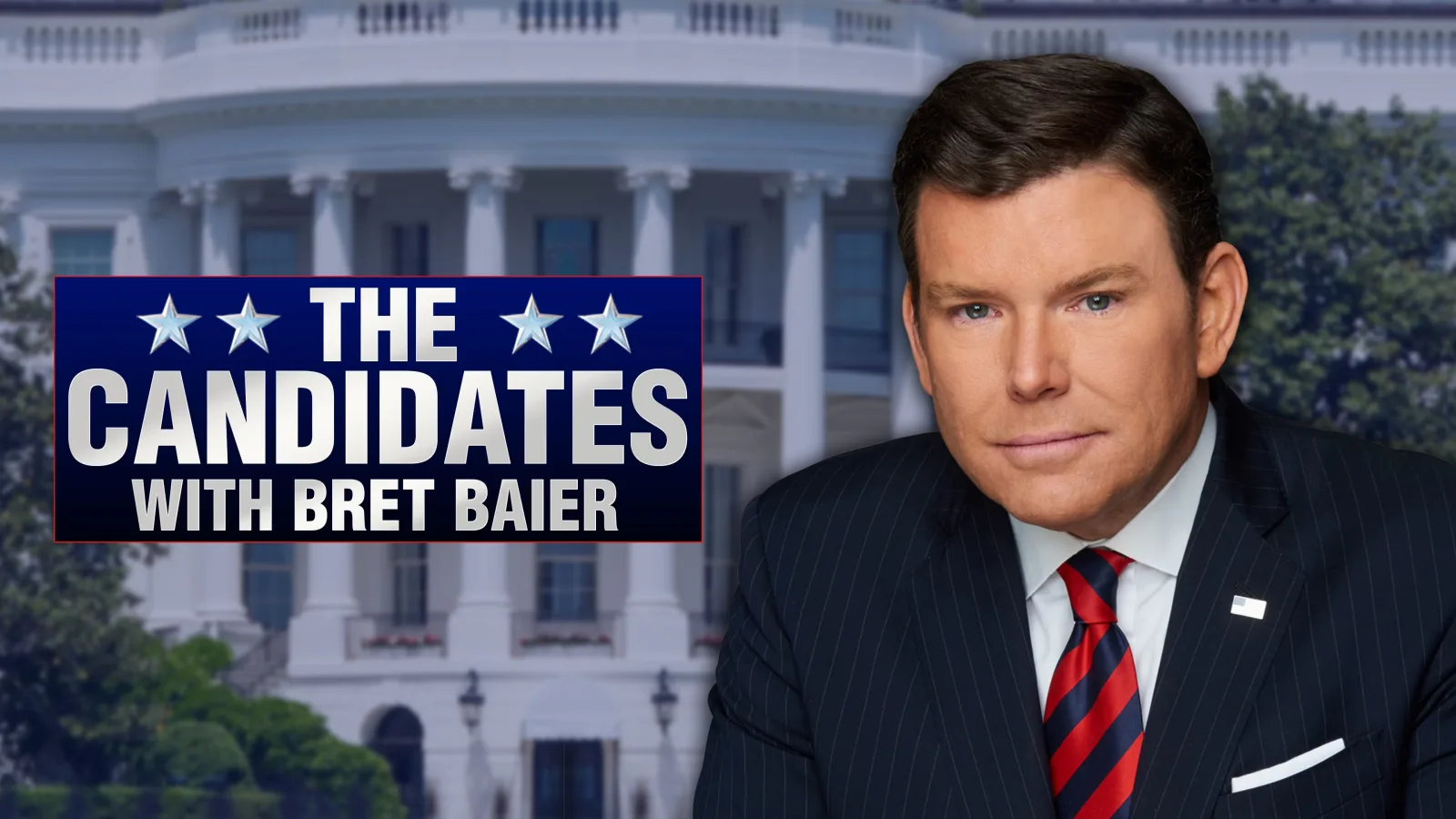
WASHINGTON, D.C. — A stunning new account from President Donald Trump has revealed the extraordinary scale of the opening strike of Operation Epic Fury, the U.S.-Israeli military campaign launched against Iran.
In an interview with Fox News chief political anchor Bret Baier, Trump said that American and Israeli forces had eliminated 49 of Iran’s most senior leaders during the opening attack.
The revelation immediately became one of the most dramatic developments of the conflict.
According to Trump, U.S. intelligence had identified a gathering of Iran’s senior leadership with extraordinary precision.
The targets were reportedly assembled together, creating what American planners viewed as an unprecedented opportunity to strike a large portion of Iran’s command structure simultaneously.
Trump described the intelligence as exceptionally accurate.
He said Iranian officials believed they were safe because the meeting occurred during daylight hours.
Instead, American forces were already aware of their location.
Fox News reported that Trump told Baier the strike took place while Iran’s top leadership was gathered for breakfast, and that the president was surprised by how much intelligence U.S. officials possessed about the meeting.
The claim immediately transformed the public understanding of the opening hours of Operation Epic Fury.
What initially appeared to be a massive military campaign was revealed, according to Trump’s account, to have included a highly concentrated effort against Iran’s senior leadership.
And the implications could be enormous.

THE INTELLIGENCE THAT CHANGED EVERYTHING
The most remarkable element of Trump’s account was not simply the number of officials reportedly killed.
It was the intelligence operation that made the strike possible.
For years, Iran’s senior leadership has operated under intense security measures designed to protect commanders and political officials from assassination or targeted attacks.
Senior officials routinely change locations.
Meetings can be moved at short notice.
Communication systems can be deliberately compartmentalized.
And gatherings of top officials are normally protected by layers of security.
Yet according to Trump’s account, American intelligence had identified precisely where the Iranian leadership had gathered.
That information allowed U.S. and Israeli planners to act quickly.
Trump told Baier that Iranian officials apparently did not believe the United States knew about the gathering.
That assumption, according to the president, became one of the most consequential mistakes of the conflict.
The result was a strike aimed directly at the top of Iran’s command structure.
Fox News subsequently reported Trump’s claim that 49 senior Iranian leaders were eliminated in the opening strike.
The scale of that claim immediately raised questions about what it could mean for the Iranian government’s ability to coordinate its military response.
THE DAYLIGHT STRIKE
Perhaps the most unusual aspect of Trump’s account was the timing.
Military planners frequently prefer darkness for certain operations because reduced visibility can provide advantages for aircraft, special operations forces and other units.
But this operation reportedly unfolded in daylight.
Trump suggested that Iranian officials believed the morning gathering provided an additional layer of protection.
Instead, according to the president, American intelligence had already located them.
The decision to strike during daylight therefore carried both operational and psychological significance.
It demonstrated that the United States did not necessarily need darkness to find or attack Iran’s leadership.
The intelligence advantage, Trump argued, was sufficient.
That message was potentially as important as the strike itself.
For Iran’s remaining commanders, the implication was unmistakable:
If American intelligence could identify a gathering of the country’s most senior leaders, virtually any location could potentially become vulnerable.
OPERATION EPIC FURY
Operation Epic Fury officially became the name associated with the broader U.S. military campaign against Iran.
The White House described the operation as a major military effort designed to destroy Iran’s offensive military capabilities and prevent the country from developing a nuclear weapon.
According to the administration, the campaign had several central objectives.
Among them were:
- destroying Iran’s ballistic missile capabilities;
- eliminating missile-production capacity;
- destroying Iranian naval capabilities;
- degrading security infrastructure;
- preventing Iran from obtaining a nuclear weapon;
- and reducing the regime’s ability to support militant proxy organizations.
The Department of War has described the mission in similarly direct terms, emphasizing missiles, missile production, naval forces and nuclear capabilities.
The White House also repeatedly emphasized that the campaign was intended to be decisive rather than become another prolonged American occupation.
That distinction became central to the administration’s political messaging.
President Trump wanted the operation portrayed as fundamentally different from the long wars that defined earlier generations of American foreign policy.
THE 49-LEADER CLAIM
Trump’s claim about the 49 leaders quickly became the most discussed element of the operation.
According to Fox News, Trump said the United States and Israel killed 49 of Iran’s most senior leaders in the opening strike.
He also suggested that American officials had originally expected the process of eliminating Iran’s leadership to take considerably longer.
Instead, the intelligence opportunity allowed the operation to strike an unusually concentrated group of senior officials.
Fox News later reported Trump saying that the leadership strike put Iran in the position of having to elevate less-established individuals into powerful positions.
If accurate, the significance would extend well beyond the loss of individual commanders.
Military organizations depend heavily on experienced leadership.
Senior commanders possess institutional knowledge, relationships, operational experience and familiarity with classified systems.
Removing large numbers of senior officials simultaneously can therefore create confusion even when an organization has replacement personnel available.
That is precisely why leadership decapitation has historically been considered such a powerful—yet controversial—military strategy.
IRAN FACES A LEADERSHIP CRISIS
The immediate question following Trump’s revelation is what happens next.
Iran has a large military and security establishment.
It possesses extensive missile forces, naval assets, intelligence organizations and paramilitary structures.
Eliminating senior leaders does not automatically eliminate those capabilities.
However, replacing experienced commanders during an active conflict can be extremely difficult.
New commanders may know their own units but lack the relationships and institutional knowledge accumulated by their predecessors.
They may also be forced to make decisions while assuming that American intelligence is monitoring their communications and movements.
That creates a psychological problem.
Every meeting becomes a potential vulnerability.
Every communication could theoretically be intercepted.
Every attempt to reorganize the command structure could expose new leaders to surveillance.
The result is a potentially powerful combination of military disruption and psychological pressure.
THE ADMINISTRATION’S MILITARY PHILOSOPHY
Supporters of the operation have presented it as evidence of a new approach to American warfare.
Rather than committing hundreds of thousands of American troops to occupy territory, the administration emphasizes air power, intelligence, precision weapons, cyber capabilities and long-range strikes.
Defense Secretary Pete Hegseth has repeatedly framed Operation Epic Fury around clearly defined military objectives.
The administration’s argument is straightforward:
The United States does not need to occupy Iran to destroy the capabilities Washington considers dangerous.
Instead, it can target the infrastructure supporting those capabilities.
The Pentagon has described the mission as focused on Iranian missiles, missile production, naval capabilities and the prevention of a nuclear weapon.
That approach reflects a broader effort to move away from the nation-building campaigns associated with Iraq and Afghanistan.
“THIS IS NOT IRAQ”
One of the strongest political arguments surrounding the campaign is that the United States should avoid repeating the experience of the post-9/11 wars.
Iraq and Afghanistan required enormous investments of American troops, money and political attention.
The conflicts lasted for years.
Thousands of American service members were killed, and many more were wounded.
The Trump administration has repeatedly argued that the United States should not repeat that model.
Instead, the objective is to use overwhelming force to destroy specific military capabilities while avoiding an open-ended occupation.
That philosophy has become a defining part of the administration’s national-security message.
Supporters call it a more realistic form of American military power.
Critics worry that even a limited military campaign can produce consequences that are impossible to control.
Both arguments remain central to the debate over Operation Epic Fury.
THE THREE CENTRAL OBJECTIVES
The administration has repeatedly emphasized several major goals.
The first is Iran’s missile arsenal.
Iran possesses one of the largest missile programs in the Middle East, making its ballistic-missile capability a major concern for Washington and its regional allies.
The second objective is Iran’s naval capability.
Iran’s geography gives it enormous strategic influence over the Persian Gulf and the Strait of Hormuz, one of the world’s most important energy chokepoints.
The third is Iran’s nuclear program.
Preventing Iran from obtaining a nuclear weapon has been one of the central arguments used to justify military pressure.
The White House has described those objectives as consistent throughout the campaign.
The administration has also focused on Iran’s support for regional proxy organizations.
Taken together, the objectives represent an attempt to weaken the Iranian government’s ability to threaten the United States and its allies.
WHY THE STRIKE MATTERS BEYOND IRAN
The consequences of Operation Epic Fury extend beyond the borders of Iran.
The Middle East is deeply interconnected.
A conflict involving Iran can affect Israel, Gulf Arab states, Iraq, Syria, Lebanon and maritime traffic through some of the world’s most important shipping routes.
Iran also has relationships with armed groups throughout the region.
Any major disruption to Iran’s command structure could therefore have unpredictable consequences.
Some groups may become weaker.
Others could respond with increased violence.
Some regional actors may attempt to negotiate.
Others may see the chaos as an opportunity to expand their own influence.
That uncertainty is one of the biggest challenges facing American planners.
THE STRAIT OF HORMUZ
The Strait of Hormuz represents one of the most important strategic pressure points in the conflict.
A significant portion of global energy supplies passes through the waterway.
Any prolonged disruption could affect oil prices, shipping costs and global markets.
That means a conflict between Washington and Tehran can quickly become an international economic issue.
The Trump administration has therefore had to balance military pressure against the possibility of economic disruption.
A successful campaign could potentially weaken Iran’s ability to threaten shipping.
But a prolonged confrontation could create exactly the kind of instability that Washington is attempting to avoid.
WHAT HAPPENS AFTER THE MILITARY CAMPAIGN?
This is perhaps the most difficult question.
Destroying military capabilities is one thing.
Determining what happens politically afterward is another.
Trump has previously suggested that the Iranian people themselves could ultimately determine the country’s political future.
That raises the possibility that Washington’s strategy is based on creating conditions for internal political change rather than installing an American-controlled government.
This distinction is crucial.
The administration has repeatedly tried to separate military objectives from the idea of long-term occupation.
But history demonstrates how difficult it can be to control what happens after a government is weakened.
Political movements can emerge unexpectedly.
Competing factions can fight for power.
Security forces can fragment.
And foreign intervention can produce consequences that are difficult to predict.
SUPPORTERS SEE A NEW MODEL OF AMERICAN POWER
For Trump’s supporters, Operation Epic Fury represents exactly what they believe American foreign policy should look like.
They argue that the United States possesses unmatched military capabilities and should use them decisively when national-security threats become unacceptable.
From this perspective, the reported leadership strike demonstrates the value of American intelligence, surveillance and precision weapons.
Rather than fighting for years, supporters argue, Washington should identify critical vulnerabilities and attack them with overwhelming force.
The objective is deterrence.
The message is simple:
If you threaten the United States, the response will be faster and more powerful than you expect.
That philosophy is at the heart of the administration’s broader “Peace Through Strength” argument.
The White House has repeatedly portrayed Operation Epic Fury as evidence that overwhelming military power can produce strategic results.
CRITICS SEE A DIFFERENT RISK
Critics of the campaign see the situation differently.
They argue that eliminating senior leaders does not necessarily end a conflict.
It can also trigger retaliation.
Iran retains military capabilities even after major losses.
Regional proxy groups may remain active.
And attacks against American personnel, Israeli targets or commercial shipping could continue.
Critics also question whether military pressure can ultimately produce a stable political outcome.
The concern is that the United States could become trapped in an escalating confrontation without a clearly defined endpoint.
That is the central strategic dilemma.
A military operation can be extraordinarily successful tactically while still producing an uncertain political outcome.
THE BATTLE FOR INFORMATION
Another important element of the conflict is the information war.
Statements from Washington, Tehran, Israel and various military organizations can differ dramatically.
Each side has an incentive to emphasize victories and minimize setbacks.
That makes independent verification extremely important.
Trump’s statement about 49 Iranian leaders was reported by Fox News and became a major part of the administration’s public narrative.
But a presidential statement is still different from an independently verified casualty assessment.
That distinction should remain clear when discussing wartime claims.
The same principle applies to claims about destroyed weapons, military facilities and strategic capabilities.
In wartime, numbers can become political weapons.
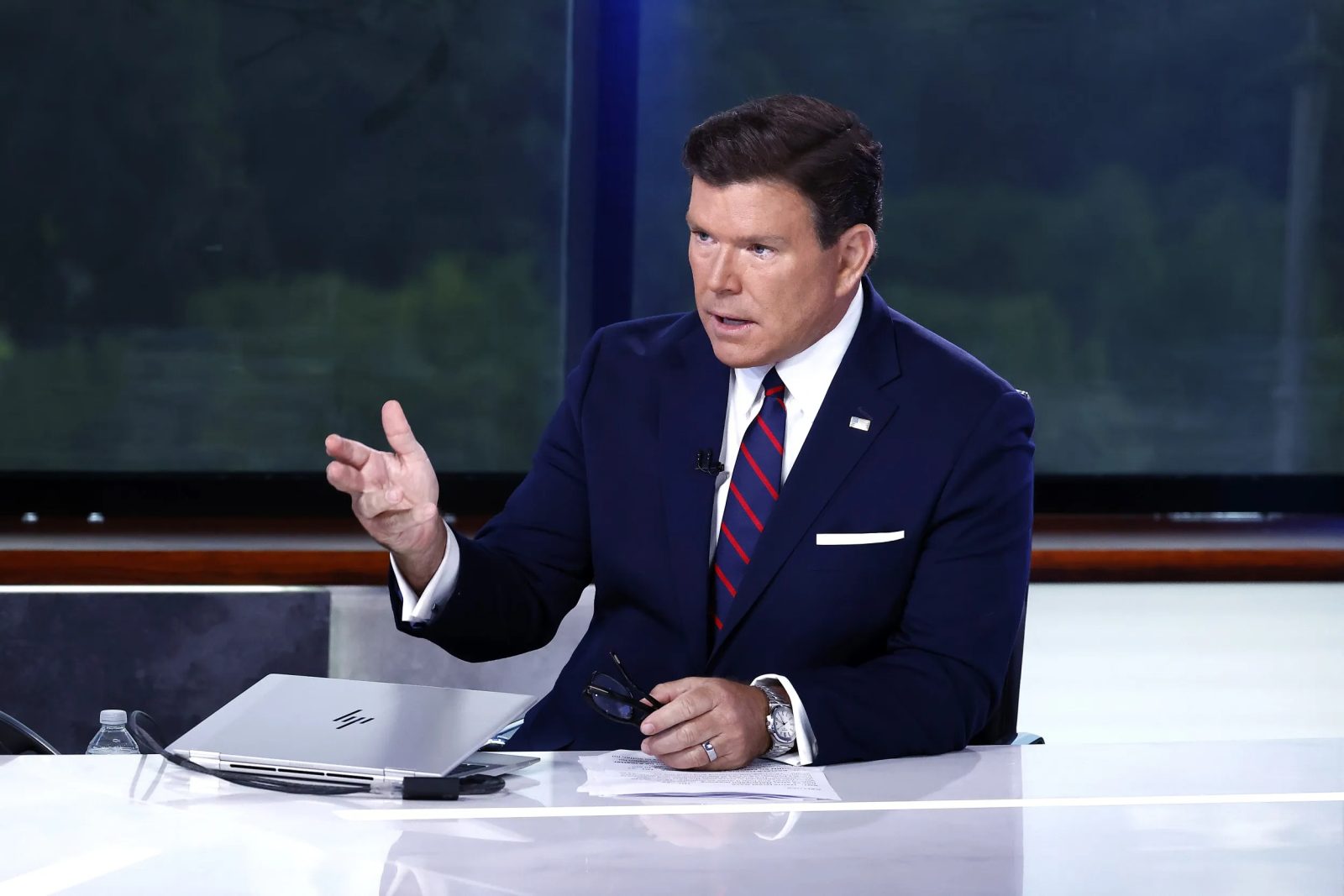
WHY THE BRET BAIER INTERVIEW MATTERED
The interview with Bret Baier gave Trump an opportunity to speak directly about the operation and describe what he believed had happened during the opening strike.
Fox News subsequently highlighted Trump’s claim about the 49 leaders.
The interview therefore became an important part of the public narrative surrounding the campaign.
It also demonstrated the political significance of direct presidential interviews during wartime.
Rather than relying solely on Pentagon briefings or official statements, the president can communicate directly with millions of viewers.
That can strengthen public support.
But it also means that individual statements can become global headlines almost instantly.
A NEW ERA OF PRECISION WARFARE?
If the administration’s description of the operation proves accurate, Operation Epic Fury could become an important case study in modern warfare.
The campaign combines:
intelligence gathering, satellite surveillance, precision weapons, air power, electronic warfare and rapid targeting.
The goal is not necessarily to occupy territory.
It is to identify critical nodes in an adversary’s military system and destroy them.
That represents a fundamentally different model from the large-scale ground invasions of previous decades.
The United States has spent enormous resources developing these capabilities.
The Iranian campaign provides one of the clearest real-world demonstrations of how they can be combined.
BUT MILITARY SUCCESS IS NOT THE SAME AS POLITICAL VICTORY
This distinction may ultimately determine how history judges Operation Epic Fury.
Destroying missile launchers is a military objective.
Destroying missile production facilities is another.
Removing senior commanders is another.
But political victory requires something different.
It requires an outcome that is sustainable.
If Iran’s government becomes weaker but more hostile, Washington may not consider that a victory.
If Iran rebuilds its military capabilities within several years, the campaign could be judged differently.
If political reform occurs inside Iran, supporters may point to the campaign as a catalyst.
And if the conflict produces years of instability, critics will argue that military force failed to solve the underlying problem.
That is why the most important chapter of Operation Epic Fury may not be the opening strike.
It may be what happens afterward.
THE BIGGER QUESTION FOR AMERICA
The conflict has revived an old question about American foreign policy:
How should the world’s most powerful military be used?
Should Washington intervene early when a threat emerges?
Should it rely primarily on diplomacy?
Should it use overwhelming force only when absolutely necessary?
Or should it combine military pressure with negotiations?
The Trump administration has clearly emphasized strength.
Its supporters believe that previous administrations allowed adversaries to become too powerful because American leaders were unwilling to use force.
Critics argue that military power must be paired with a realistic political strategy.
The debate is unlikely to disappear.
OPERATION EPIC FURY AND THE FUTURE
Whatever one’s political opinion, Operation Epic Fury has already become one of the defining military operations of the Trump administration.
The White House has portrayed the campaign as a demonstration of overwhelming American military power.
The Department of War has described its mission in terms of destroying Iranian offensive capabilities and preventing the acquisition of a nuclear weapon.
Fox News has reported Trump’s claim that 49 senior Iranian leaders were eliminated during the opening strike.
Those claims have transformed the way the opening phase of the conflict is being discussed.
But the ultimate judgment will depend on what comes next.
Can Iran rebuild its command structure?
Can the United States prevent further escalation?
Can the Strait of Hormuz remain secure?
Can negotiations produce a lasting political settlement?
And most importantly, can Washington achieve its objectives without becoming trapped in another endless Middle Eastern war?
Those questions remain unanswered.
THE BOTTOM LINE
The dramatic claims surrounding Operation Epic Fury are not simply another headline in an already chaotic year of international politics.
They represent a fundamental test of the Trump administration’s theory of American power.
According to Trump, U.S. intelligence identified a gathering of Iran’s senior leadership and allowed American and Israeli forces to strike at the heart of the regime’s command structure.
Fox News reported the president’s claim that 49 senior Iranian leaders were eliminated in the opening attack
The White House and Pentagon have separately described Operation Epic Fury as a campaign focused on Iran’s missiles, missile production, naval forces and nuclear ambitions.
For supporters, this is what decisive American military power looks like.
For critics, the real test has only begun.
Because destroying an enemy’s leadership is one thing.
Building a stable future after the missiles stop flying is another.
And that is the question that will ultimately determine whether Operation Epic Fury is remembered as a historic demonstration of American strength—or as the beginning of an even larger and more unpredictable confrontation in the Middle East.
Leave a Reply